
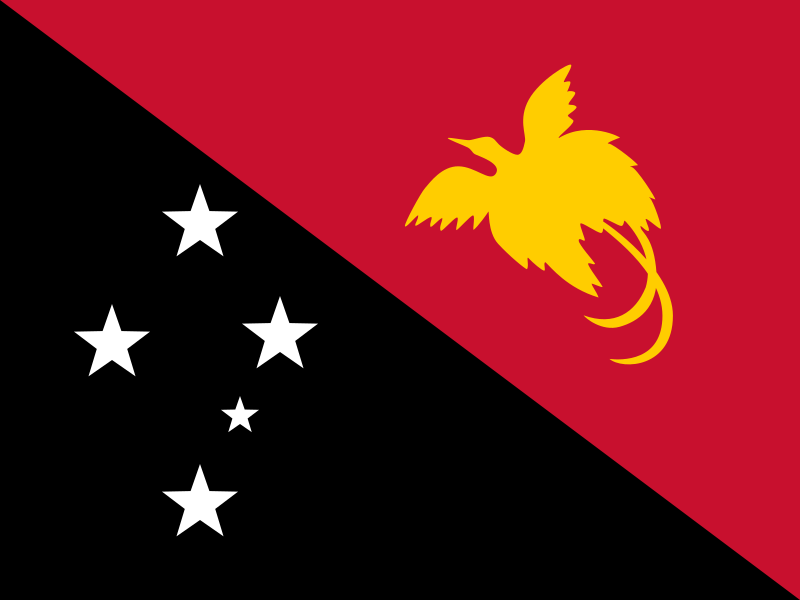
Papua New Guinea
Papua New Guinea (PNG) is a dynamic and democratic country in the Southwest Pacific, north of Australia. The capital is Port Moresby. PNG boasts more than 800 distinct languages and tribes and is home to a number of unique tropical species. Tourist facilities outside major towns are limited, and crime is a concern throughout the country (please see the section on crime below). Read the Department of State Fact Sheet on Papua New Guinea for additional information.
Transportation
TRAFFIC SAFETY AND ROAD CONDITIONS: While in Papua New Guinea, you may encounter road conditions that differ significantly from those in the United States. The information below concerning Papua New Guinea is provided for general reference only and may not be totally accurate in a particular location or circumstance.
Traffic in Papua New Guinea moves on the left. Motor vehicle accidents are a common cause of serious injury in Papua New Guinea, especially to passengers sitting in the open bed of a pickup truck. Whether the driver or a passenger, you should wear a seatbelt at all times. There is no countrywide road network. Roads, especially in rural areas, are in a poor state of repair. Other common safety risks on PNG roads include erratic and drunk drivers, poorly maintained vehicles, and over-crowded vehicles. During the rainy season, landslides occur on some stretches of the Highlands Highway between Lae and Mount Hagen. Vehicles often encounter criminal roadblocks on the Highlands Highway during the day and after dark.
Police roadblocks to check vehicle registrations are a regular occurrence at night in Port Moresby. As a driver, you should ensure that your vehicle registration and safety stickers are up-to-date in order to minimize difficulties at roadblocks.
Crowds can react emotionally and violently after road accidents. Crowds form quickly after an accident and may attack those whom they hold responsible by stoning and/or burning vehicles. Friends and relatives of an injured party may demand immediate compensation from the party they hold responsible for injuries, regardless of legal responsibility. If you are involved in an accident and you feel threatened, go directly to the nearest police station instead of remaining at the scene of the accident.
Please refer to our Road Safety page for more information. For specific information concerning Papua New Guinea driving permits, vehicle inspection, road tax, road safety and mandatory insurance, please call the Papua New Guinea’s Motor Vehicle Institute Limited at 675-325-9666 or 675-302-4600.
AVIATION SAFETY OVERSIGHT: As there is no direct commercial air service to the United States by carriers registered in Papua New Guinea, the U.S. Federal Aviation Administration (FAA) has not assessed the government of Papua New Guinea’s Civil Aviation Authority for compliance with International Civil Aviation Organization (ICAO) aviation safety standards. Further information may be found on the FAA’s safety assessment page.
Safety and Security
Tensions between communal or clan groups may result in local conflicts involving bush knives, machetes, or firearms. Consult with your tour operator or with Papua New Guinean authorities for current information on areas where you intend to travel.
Exercise a high degree of caution in Bougainville. Law enforcement in this area is ineffective, and tourist and transportation facilities are limited. Areas near the Panguna mine, located on the southern part of the Island of Bougainville, have been officially designated “no go zones” by the Autonomous Government of Bougainville; we strongly recommend that you avoid those areas.
Unexploded ordinance and mines may be found in Bougainville, East New Britain, and throughout the Papua New Guinea islands. Exercise caution when walking or hiking off marked roads and trails.
To stay connected:
- Enroll in the Smart Traveler Enrollment Program so we can keep you up to date with important safety and security announcements.
- Follow the Bureau of Consular Affairs on Twitter and Facebook.
- Bookmark the Bureau of Consular Affairs website, which contains the current Travel Warnings and Travel Alerts as well as the Worldwide Caution.
- Follow the U.S. Embassy in Papua New Guinea on Twitter and visiting the Embassy’s website
- In the event of an emergency, contact us at 1-888-407-4747 toll-free within the United States and Canada, or via a regular toll line, 1-202-501-4444, from other countries.
- Take some time before traveling to consider your personal security and checking for useful tips for traveling safely abroad.
CRIME: Papua New Guinea has a high crime rate. U.S. citizens have been victims of violent crime, including gang-rape, carjacking, home invasions, kidnappings, and armed robberies. Crime rates are highest in and around major cities such as Port Moresby, Lae, Madang, Mount Hagen, and Goroka, but crimes can occur anywhere. You are at a greater risk of violent crimes such as robbery or sexual assault if you travel alone, especially if you plan to hike in isolated rural areas. Pickpockets and opportunistic bag-snatchers frequent crowded public areas, including parks, golf courses, beaches, and cemeteries. Bag-snatchers may try to open doors of automobiles that are stopped or moving slowly in traffic. Please see our page on Personal Safety.
Organized tours booked through travel agencies remain the safest means to visit Papua New Guinea, although on rare occasions, even persons participating in organized tours have been subject to violent robbery, assault, serious injury, or death. In Papua New Guinea, avoid using local taxis or buses, known as Public Motor Vehicles (PMVs). Rely on your sponsor or hotel to arrange for hotel transportation or a rental car. Road travel outside of major towns can be hazardous due to criminal roadblocks near bridges, curves in the road, or other areas where vehicle speed and mobility is restricted. Lock your doors and keep your windows rolled up. Avoid driving after dark, if possible. Please consult with local law enforcement officials concerning security conditions before driving between towns. (See the Traffic Safety and Road Conditions section below.) Travel to isolated places in Papua New Guinea is possible primarily by small passenger aircraft to the many small airstrips throughout the country. Security measures at these airports throughout Papua New Guinea are often inadequate. When possible, only fly during daylight hours.
Sexual Assault: There have been multiple cases of sexual assault, including gang rapes, of U.S. citizens traveling throughout Papua New Guinea. Sexual violence occurs not only in the capital of Port Moresby but is common in many parts of the country, against both local and expatriate women. U.S. citizens, particularly women, are cautioned not to travel alone in Papua New Guinea. Women should observe stringent security precautions, including avoiding use of public transport, especially after dark, restricting evening entertainment to venues with good security, and avoiding isolated areas when alone at any time of day. When possible, travel with groups of well-known, trusted people rather than alone. Women traveling in Papua New Guinea are advised to respect local dress and customs. Customary everyday dress for women throughout the country is conservative, and even more so in non-urban areas, with women wearing clothing that covers their legs past the knee and shoulders. Some hotels in Papua New Guinea offer a female-only floor or section for added safety, so women traveling alone may wish to inquire if their lodging offers such a choice.
Hiking Trails: Exercise caution if you plan to hike the Kokoda Track, the Black Cat Track, or other trails in Papua New Guinea. Travel with guides from a reputable tour company. Local landowners occasionally threaten to close parts of the tracks due to local land and compensation disputes. Check with your travel agent and/or tour operator for contingency plans in the event that a track is blocked. Hikers have been attacked even though they are part of an organized tour, some sustaining serious injuries or death. You are strongly advised to purchase appropriate travelers/medical insurance, including medical evacuation coverage, before arriving in Papua New Guinea. The Kokoda Track Authority (KTA) has stationed rangers along the track and at airports to collect fees from trekkers who have not obtained a valid trekking permit. The KTA can be contacted by telephone at 675-325-5540 or 675-325-1887 regarding payment of applicable fees.
VICTIMS OF CRIME: If you or someone you know becomes the victim of a crime abroad, contact the local police and the nearest U.S. embassy or consulate. We can:
- Replace a stolen passport.
- Help you find appropriate medical care if you are the victim of violent crimes such as assault or rape.
- Put you in contact with the appropriate police authorities, and if you want us to, contact family members or friends.
- Help you understand the local criminal justice process and direct you to local attorneys, although it is important to remember that local authorities are responsible for investigating and prosecuting the crime.
The local equivalent to the “911” emergency line in Papua New Guinea is “111”. However, be aware that police are severly underresourced, so no police personnel may answer the emergency line or be available to respond.
Please see our information for victims of crime, including possible victim compensation programs in the United States.
Population: 8,947,024
Total Land Area: 452,860 km2
Population/km2: 19.76
Official Visa Info: Immigration & Citizenship Authority (ICA)