North Macedonia
Macedonia is a parliamentary democracy that is slowly but steadily transforming its economy. Tourist facilities are available in the capital, Skopje, and other major towns. In tourist centers, such as Skopje and Ohrid, European-standard hotels and other travel amenities are available. The standard of tourist facilities throughout the rest of the country varies considerably. Read the Department of State’s Fact Sheet on Macedonia for additional information on U.S.- Macedonian relations.
Transportation
TRAFFIC SAFETY AND ROAD CONDITIONS: While in Macedonia, you may encounter road conditions that differ significantly from those in the United States. Driving safely in Macedonia requires excellent defensive driving skills.
Precautions for Drivers and Pedestrians in Macedonia:
- Many local drivers routinely ignore speed limits and other traffic regulations, such as stopping for red lights and stop signs.
- Drivers may make illegal left turns from the far right lane, or drive into oncoming lanes of traffic.
- Most major highways are in good repair, but many secondary urban and rural roads are poorly maintained and poorly lit.
- Horse-drawn carts, livestock, dead animals, rocks, or other objects are sometimes found in the roadway.
- Many vehicles are old and lack standard front or rear lights. Secondary mountain roads can be narrow, poorly marked, and lacking guardrails, and can quickly become dangerous in inclement weather.
- Public transportation in Macedonia is dilapidated.
- Roadside emergency services are limited.
- Drivers and passengers should always wear seat belts in Macedonia.
- Pedestrians should be very cautious when crossing the street, even when using crosswalks, as local drivers often do not slow down or stop for pedestrians.
A valid U.S. driver's license and an International Driving Permit are required for U.S. citizens driving in Macedonia.
In case of emergency, drivers may contact the police at telephone 192, the Ambulance Service at telephone 194, and Roadside Assistance at telephone 196.
Please refer to our Road Safety page for more information. Also, we suggest that you visit Macedonia’s tourist office and road authority.
AVIATION SAFETY OVERSIGHT: As there is no direct commercial air service to the United States by carriers registered in Macedonia, the U.S. Federal Aviation Administration (FAA) has not assessed the government of Macedonia’s Civil Aviation Authority for compliance with International Civil Aviation Organization (ICAO) aviation safety standards. Further information may be found on the FAA’s safety assessment page.
Safety and Security
Protests: Macedonia has not experienced incidents of large-scale public violence in recent years, although there have been occasions where protest activity devolved into localized violent incidents. Public protests, demonstrations, and strikes in response to world or local events can sporadically occur in Macedonia. Traffic disruptions and police diversion of traffic often occurs in connection with these demonstrations, particularly near the center of Skopje. While the vast majority of demonstrations in Macedonia are peaceful, you should be aware that even demonstrations intended to be peaceful can turn confrontational and possibly escalate into violence. You are urged to avoid demonstration areas if possible, and to exercise caution if traveling within the vicinity of any demonstrations. You should monitor media coverage to stay abreast of local events and should be aware of your surroundings at all times. Information regarding demonstrations in Macedonia can be found on the U.S. Embassy in Macedonia’s website along with our most recent security and emergency messages for U.S. citizens.
To stay connected:
- ·Enroll in the Smart Traveler Enrollment Program so we can keep you up to date with important safety and security announcements.
- Follow the Bureau of Consular Affairs on Twitter and Facebook.
- Bookmark the Bureau of Consular Affairs website, which contains the current Travel Warnings and Travel Alerts as well as the Worldwide Caution.
- Follow the U.S. Embassy in Macedonia on Twitter, Facebook, and by visiting the Embassy’s website.
- In the event of an emergency, contact us at 1-888-407-4747 toll-free within the United States and Canada, or via a regular toll line at 1-202-501-4444 from other countries.
- Take some time before traveling to consider your personal security and check for useful tips for traveling safely abroad.
CRIME: You should take the same precautions regarding crime as you would in any U.S. city. Violent crime against U.S. citizens is rare. Theft and other petty street crimes do occur, particularly in areas where tourists and foreigners congregate.
Take some common sense precautions to protect your property:
- Do not leave valuables, including cell phones and electronic items, in plain view in unattended vehicles.
- Securely lock the windows and doors of your residence when it is not occupied.
- Organized crime is present in Macedonia; organized criminal activity occasionally results in violent confrontations between members of rival organizations.
- ATM use is generally safe; however, travelers should take standard safety precautions and be aware of their surroundings.
Pickpockets are a problem in crowded areas of Skopje. Be aware of your belongings and surroundings at all times. Pickpockets use various diversionary tactics to distract victims; one method involves groups of children swarming the victim and asking for money to allow their accomplice to surreptitiously find and take your wallet. Victims of pick pocketing should report the crime to the police and cancel their credit cards as soon as possible.
Taxis are a common and generally safe form of transportation. Use a legitimate, metered taxi to avoid conflicts about the fare.
VICTIMS OF CRIME: If you or someone you know becomes the victim of a crime abroad, you should contact the local police and the nearest U.S. embassy or consulate. We can:
- Replace a stolen passport.
- Help you find appropriate medical care if you are the victim of violent crimes such as assault or rape.
- Put you in contact with the appropriate police authorities, and if you desire, contact family members or friends.
- Help you understand the local criminal justice process and direct you to local attorneys, although it is important to remember that local authorities are responsible for investigating and prosecuting the crime.
- The local equivalent to the “911” emergency line in Macedonia is 192 for police and 194 for ambulance.
Please see our information for victims of crime, including possible victim compensation programs in the United States.
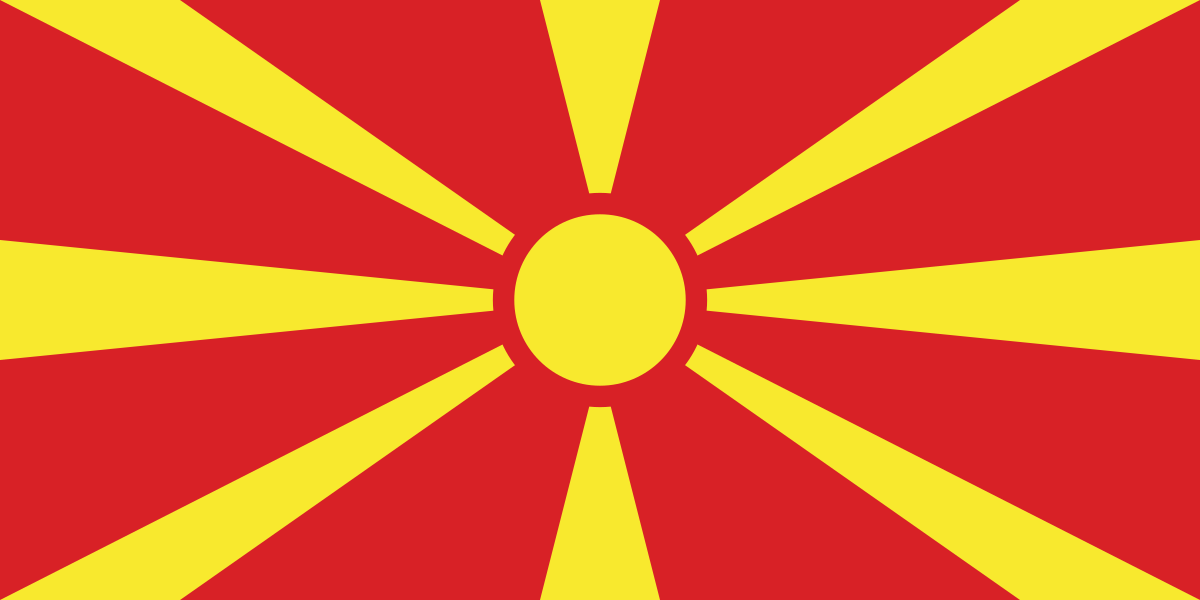
Population: 2,083,374
Total Land Area: 25,220 km2
Population/km2: 82.61
Official Visa Info: Ministry of Foreign Affairs / Ministry of Interior