
Sri Lanka
Sri Lanka is a presidential parliamentary democracy with a developing economy. Sri Lanka's beaches, hill country, and archaeological sites attract visitors from around the world. Tourism continues to increase. The capital city of Colombo, the Cultural Triangle (Dambulla, Anuradhapura, and Polonnaruwa), the cities of Kandy and Galle, and many southern beach towns have good tourist facilities, and the roads connecting many of those destinations are generally good and improving.
A presidential election held on January 8th, 2015 brought to power a new government which has promised constitutional and electoral reforms. The new government has promised to hold parliamentary elections in 2015.
On May 18, 2009, more than 26 years of conflict ended with the Sri Lankan government defeat of the Liberation Tigers of Tamil Eelam (LTTE). During the war, the LTTE had a history of attacks against civilians, though none were directed against U.S. citizens. There have been no terrorist attacks since the end of the conflict, and the government has authority throughout the island. The LTTE remains on the U.S. list of designated terrorist organizations. Visitors can travel to all provinces; former prohibitions on visiting some provinces no longer exist.
Please read the Department of State’s Fact Sheet on Sri Lanka for additional information.
Transportation
TRAFFIC SAFETY AND ROAD CONDITIONS: While in Sri Lanka, U.S. citizens may encounter road conditions that differ significantly from those in the United States. Vehicular traffic in Sri Lanka moves on the left (British style). Traffic in Colombo can be congested. Narrow two-lane highways, overloaded trucks, poorly driven buses, and a variety of conveyances on the road, ranging from ox carts and bicycles to new four-wheel-drive vehicles, make driving dangerous. Unexpected road blocks and one-way streets are common and may not be clearly marked. Many visitors hire cars and drivers for long trips through the country. Individuals who choose to hire three-wheeled vehicles (“tuks” or “three wheelers”) should use metered vehicles or negotiate prices beforehand to avoid confrontations upon arrival. If you are renting a vehicle, you should specifically request one with working seatbelts.
Please refer to our Road Safety page for more information. Also, we suggest that you visit the website of the Sri Lanka’s national tourist office.
AVIATION SAFETY OVERSIGHT: As there is no direct commercial air service to the United States by carriers registered in Sri Lanka, the U.S. Federal Aviation Administration (FAA) has not assessed the government of Sri Lanka’s Civil Aviation Authority for compliance with International Civil Aviation Organization (ICAO) aviation safety standards. Further information may be found on the FAA’s safety assessment page.
Safety and Security
The Sri Lankan military continues to maintain a heavy presence in the north, and military roadblocks and checkpoints may be encountered when traveling in this region.
Although the government and international non-governmental organizations (NGOs) continue operations to locate and dispose of landmines in the north, a number of areas are still mined. Landmines and unexploded ordnance are found in parts of northern and eastern Sri Lanka, especially in the areas north of Vavuniya, including the areas of Jaffna, Kilinochchi, Mullaitivu, Mannar and Puthukudiyiruppu (PTK). A map of the affected areas is available. Travelers in these areas should stay on main, heavily traveled roads, and never walk in forested or agricultural areas or in abandoned properties. Travelers should make themselves aware of, and able to recognize and avoid, any area cordoned off for landmine clearance. Travelers should not touch anything that resembles a landmine or unexploded ordnance and should notify local police if they see something that resembles a landmine.
U.S. citizens living or traveling in Sri Lanka should be aware of their personal surroundings and follow prudent security practices. Travelers should avoid political rallies, military bases, military or police convoys, and closed areas of high security zones.
Demonstrations in Colombo are a regular occurrence. Most demonstrations are peaceful, resulting only in traffic congestion; however, some have ended in violence between the protesters and police or opposition groups. While the majority of demonstrations are related to internal Sri Lankan politics, protests directed toward western embassies and international organizations are not uncommon. Demonstrations can occur with little or no advance notice. Even those intended to be peaceful can turn confrontational and escalate into violence. The U.S. Embassy recommends that U.S. citizens avoid areas of demonstrations and exercise caution if in the vicinity of any large gatherings, protests, or demonstrations. Travelers should check the U.S. Embassy Colombo website for possible updates, enroll in the Smart Traveler Enrollment Program (STEP) to receive e-mail messages or cellular phone short message service (SMS) texts about impending demonstrations and monitor media coverage of local events. Travelers should remain aware of their surroundings at all times, review their personal security plans, and follow the instructions of local authorities.
U.S. citizens are encouraged to always carry their U.S. passports while in Sri Lanka. U.S. citizens of Sri Lankan origin may be subject to additional scrutiny upon arrival and while in the country.
To stay connected:
- Enroll in the Smart Traveler Enrollment Program so we can keep you up to date with important safety and security announcements.
- Follow the Bureau of Consular Affairs on Twitter and Facebook.
- Bookmark the Bureau of Consular Affairs website, which contains the current Travel Warnings and Travel Alerts as well as the Worldwide Caution.
- Follow the U.S. Embassy in Sir Lanka on Twitter and visit the U.S. Embassy website.
- In the event of an emergency, contact us at 1-888-407-4747 toll-free within the United States and Canada, or via a regular toll line, 1-202-501-4444, from other countries.
- Take some time before traveling to consider your personal security and check for useful tips for traveling safely abroad.
CRIME: There is an elevated criminal threat in Sri Lanka. Most violent crime occurs within the local community. However, reports of violent crime, sexual assaults and harassment directed at foreigners have been increasing in recent months. Police response to assist victims can vary from a few minutes to hours, even in the tourist areas, and particularly in remote areas.
Organized and armed gangs are known to operate in Sri Lanka and have been responsible for targeted kidnappings and violence, although there is no evidence to suggest that U.S. citizens are at particular risk. The Sri Lankan justice system can be slower than in the United States and there are a number of outstanding cases of crimes against foreign nationals.
U.S. citizens are advised against travel on public buses in Sri Lanka, as passengers can be targets of criminal activity and bus drivers do not consistently obey driving regulations.
Travelers, especially women, should consider travelling with other people when possible. Western women continue to report incidents of verbal and physical harassment by groups of men. Such harassment can occur anytime or anywhere, but most frequently has taken place in crowded areas such as marketplaces, train stations, buses, public streets and sporting events. The harassment ranges from sexually suggestive or lewd comments to physical advances, and sexual assaults have occurred as well. While most victims of sexual assault have been local residents, an upswing in sexual attacks against female visitors in tourist areas in the southern beaches underlines the fact that foreign women should exercise vigilance.
Routine petty crime, especially thefts of personal property and pick-pocketing, is not uncommon if the traveler does not take appropriate safeguards. Street hustlers or “touts” are common around hotels, shopping centers, and tourist sites. Credit card fraud is frequent and can happen in any establishment, or when paying online. Sri Lankan law enforcement have uncovered foreign rings of criminals using “false fronts’” and “pen camera devices” to clone bank cards and steal personal identification numbers at ATM machines in Sri Lanka. Travelers should consider paying in cash whenever possible, and should carefully review billing statements to ensure that purchases displayed on their credit card statements are accurate. Consultation with personal credit card security advisors is encouraged for travelers to develop a protection plan that is best for your travel to Sri Lanka.
VICTIMS OF CRIME: If you or someone you know becomes the victim of a crime abroad, you should contact the local police and the nearest U.S. embassy or consulate. We can:
- Replace a stolen passport.
- Help you find appropriate medical care for violent crimes such as assault or rape.
- Put you in contact with the appropriate police authorities and contact family members or friends.
- Help you understand the local criminal justice process. We can also direct you to local attorneys, although the local authorities are responsible for investigating and prosecuting crimes.
The local equivalent to the “911” emergency line in Sri Lanka is 119. This number only contacts the police and does not provide access to emergency medical services. Although the number is answered 24 hours a day, police responsiveness may vary.
Please see our information on victims of crime, including possible victim compensation programs in the United States.
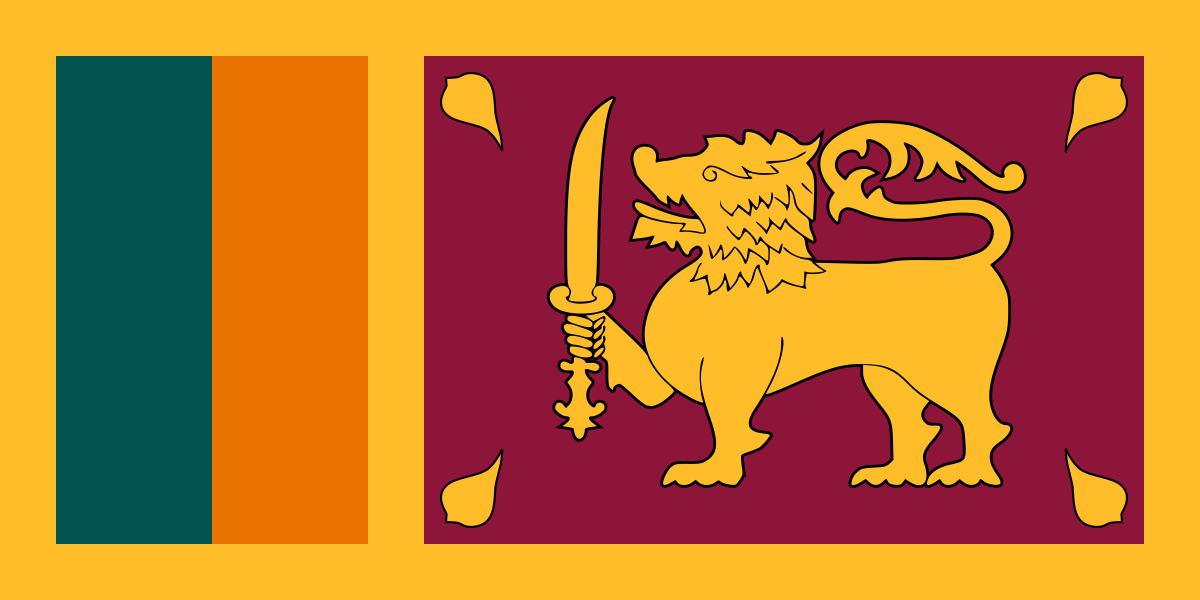
Population: 21,413,249
Total Land Area: 62,710 km2
Population/km2: 341.46
Official Visa Info: Department of Immigration & Emigration (ETA)