
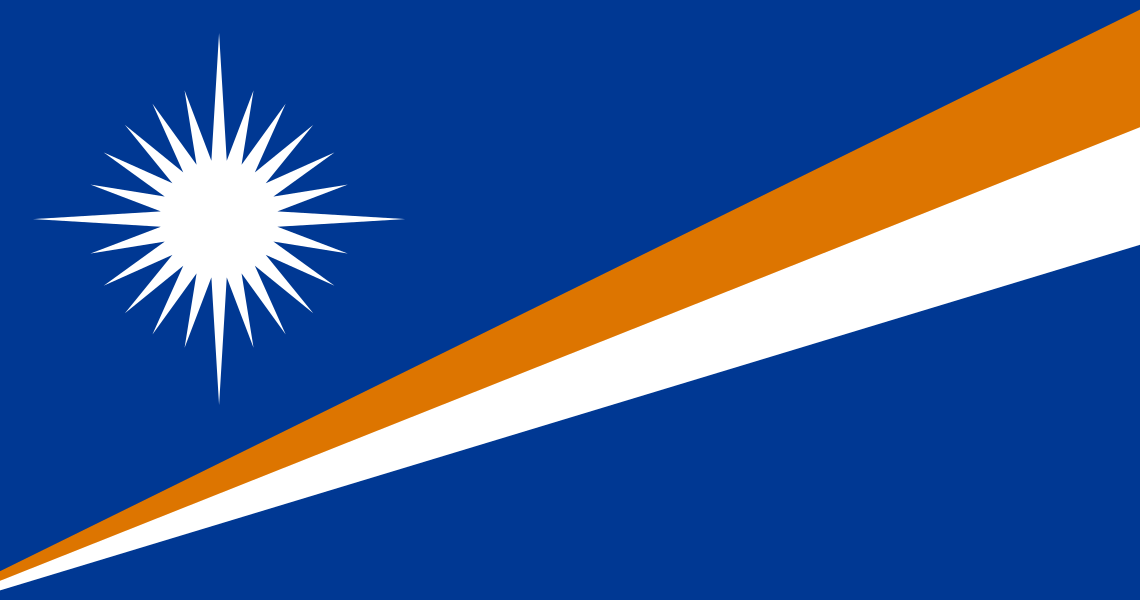
Marshall Islands
See the Department of State's Fact Sheet for additional information on U.S.-RMI relations.
Transportation
Road Conditions and Safety: While in the Marshall Islands, you may encounter road conditions that differ significantly from those in the United States. The information below concerning the Marshall Islands is provided for general reference only and may not be completely accurate in a particular location or circumstance.
Majuro atoll has only one main road and there are no street addresses or house numbers. The road is paved, but there are few traffic signs and no traffic lights. While driving, you should be alert for dogs, chickens, and pigs roaming the streets, and children darting into the road, especially after dark. Children frequently play dangerous games with vehicles, running in front of or behind vehicles. Drinking and driving is common, especially on the weekends, so use caution. Walking beside the street can be dangerous due to poor lighting, the absence of sidewalks, and drivers who may have been drinking. On outer atolls, there is no transportation for evacuation to the rudimentary medical facilities on the two atolls with hospitals (Majuro and Kwajalein).
Traffic Laws: Vehicle traffic proceeds slowly, rarely more than 25 miles per hour. Roads experience temporary flooding after heavy rains and during especially high tides. Because there are few streetlights, visibility is poor, and night driving requires special caution. For specific information concerning drivers’ permits, vehicle inspection, road tax, and mandatory insurance, please contact the Embassy of the Republic of the Marshall Islands.
Public Transportation: The public transportation system is nonexistent, but taxis are inexpensive and widely available.
Please refer to our Road Safety page for more information. Also, we suggest that you visit the website of the RMI’s national tourist office and national authority responsible for road safety.
Flights: United Airlines flies once a day through Majuro, six days a week. Three days a week the flights in and out of the Marshall Islands are to the west toward Guam, and three days a week east to Honolulu. Although Air Marshall Islands also operates within the Marshall Islands, service is not reliable. Be aware that flights and boats to and from outer islands are often cancelled, sometimes leaving visitors stranded for one or more weeks.
AVIATION SAFETY OVERSIGHT: As there is no direct commercial air service to the United States by carriers registered in Republic of the Marshall Islands, the U.S. Federal Aviation Administration (FAA) has not assessed the government of Republic of the Marshall Islands’ Civil Aviation Authority for compliance with International Civil Aviation Organization (ICAO) aviation safety standards. Further information may be found on the FAA’s safety assessment page.
Safety and Security
CRIME: The Marshall Islands has a low crime rate. The most common crimes are break-ins and thefts from homes, hotel rooms, and vehicles, as well as occasional random acts of vandalism. Keep your hotel room or residence locked at all times. There have been a few recent but isolated incidents in which foreigners were assaulted. It is recommended that visitors dress conservatively; bare shoulders and skin showing above the knee, especially for females, may be considered offensive to some Marshallese citizens. Occasionally, fights and assaults occur at nightclubs and bars. If you visit those establishments, especially late in the evening, be extra vigilant to ensure your personal security.
Victims of Crime:
Report crimes to the local police at 625-6911 and contact the U.S. Embassy at (692)-455 8213. Remember that local authorities are responsible for investigating and prosecuting the crime.
See our webpage on help for U.S. victims of crime overseas.
We can:
- help you find appropriate medical care
- assist you in reporting a crime to the police
- contact relatives or friends with your written consent
- explain the local criminal justice process in general terms
- provide a list of local attorneys
- provide our information on victim’s compensation programs in the U.S.
- provide an emergency loan for repatriation to the United States and/or limited medical
- support in cases of destitution
- help you find accommodation and arrange flights home
- replace a stolen or lost passport
Domestic Violence: U.S. citizen victims of domestic violence may contact the Embassy for assistance.
The local equivalent to the "911" emergency line in the Marshall Islands is "625-6911”.
For further information:
- Enroll in the Smart Traveler Enrollment Program (STEP) to receive security messages and make it easier to locate you in an emergency.
- Call us in Washington at 1-888-407-4747 toll-free in the United States and Canada or 1-202-501-4444 from other countries from 8:00 a.m. to 8:00 p.m. Eastern Standard Time, Monday through Friday (except U.S. federal holidays).
- See the State Department's travel website for Worldwide Caution, Travel Warnings, and Travel Alerts.
- Follow us on Twitter and Facebook.
- See traveling safely abroad for useful travel tips.
Population: 59,190
Total Land Area: 180 km2
Population/km2: 328.83