
Ecuador
Ecuador is a Spanish-speaking country approximately the size of Colorado. It has a democratically elected government. In general, tourist facilities are adequate but vary in quality. Crime is a significant concern. Ecuador uses the U.S. dollar as its official currency, and U.S. bills and both U.S. and locally minted coins are accepted everywhere. Read the Department of State’s Fact Sheet on Ecuador for additional information on U.S.-Ecuador relations.
Transportation
TRAFFIC SAFETY AND ROAD CONDITIONS: While in Ecuador, you may encounter road conditions that differ significantly from those in the United States. Although some of Ecuador’s roads and highways have greatly improved in recent years, road travel throughout Ecuador can still be dangerous, especially at night. Some roads are poorly maintained, or vulnerable to heavy rains and mudslides. Mountain roads may lack safety features such as crash barriers or guard rails, and conditions are frequently made more treacherous by heavy fog. Highways are often unmarked and unlit, and do not have signs indicating destinations. In addition, slow-moving buses and trucks frequently stop in the middle of the road unexpectedly. In the countryside, livestock is often herded along roads or grazes on roadsides. Due to a lack of sidewalks, many roads are also used by pedestrians.
Driving practices differ from U.S. standards, and drivers often disobey traffic laws and signals. Buses stop without warning to pick up or drop off passengers. Drivers often turn right and left from any lane, and rarely yield to pedestrians and cyclists. You might encounter intoxicated drivers at any time, though the chances of a drunk-driving accident are higher on weekends and Ecuadorian holidays. On the coast in particular, many vehicles are poorly maintained and breakdowns are common.
If you are the driver of a vehicle involved in an automobile accident, even if you are not at fault, you may be taken into police custody, especially if injuries are involved or if you do not have insurance. If injuries or damages are serious, you may face criminal charges.
Driver’s Licenses: You may drive in Ecuador using your state-issued driver’s license for up to 90 days. If you are staying in Ecuador for a prolonged period, you should contact the National Transit Agency to obtain a valid driver’s license.
Importing a Vehicle: You should investigate local regulations before attempting to import any vehicle into Ecuador on a temporary or permanent basis. If you are able to register a vehicle in Ecuador, you will be required to buy local liability insurance, called SOAT.
Traveling by Bus: Intra- and inter-city bus passengers are often targets of crime, including robbery and sexual assault. Numerous bus accidents occur every year in Ecuador, and many buses are overcrowded, poorly maintained, and lack seat belts or other safety features. In Guayaquil, security on public transportation is a major concern. Armed criminals have been known to board local city buses and rob passengers of jewelry, money, and other valuables. There have been instances in which routes between cities are blocked by criminals, who force the bus to stop and then board the bus to rob passengers.
Please refer to our Road Safety page for more information. In addition, we suggest that you visit the Spanish-language websites of Ecuador’s national tourist office.
AVIATION SAFETY: The U.S. Federal Aviation Administration (FAA) has assessed the Government of Ecuador’s Civil Aviation Authority as being in compliance with International Civil Aviation Organization (ICAO) aviation safety standards for oversight of Ecuador’s air carrier operations. Further information may be found on the FAA’s safety assessment page.
Safety and Security
For Emergeincies in Ecuador, Dial 911. English-speaking 911 operators are available.
Civil Unrest: Political demonstrations occur frequently throughout Ecuador. During demonstrations, protesters often block city streets and rural highways, including major arteries such as the Pan American Highway, disrupting public and private transportation. Protesters sometimes burn tires, throw rocks, damage cars and other personal property, and on occasion detonate small incendiary devices, such as Molotov cocktails. Police response to demonstrations varies, but may include water cannons and tear gas. U.S. citizens and U.S.-affiliated interests are not usually targeted, but you should avoid areas where demonstrations are in progress and be prepared with back-up transportation plans. Remember that even peaceful demonstrations can turn violent with little or no warning.
Northern Border Region: Due to the spread of organized crime, drug and small-arms trafficking, and incursions by terrorist organizations near Ecuador’s border with Colombia, the U.S. Embassy in Quito advises caution when traveling to northern Ecuador, including the provinces of Sucumbios, northern Orellana (including the city of Coca), Carchi, and northern Esmeraldas (including the city of Esmeraldas). U.S. government personnel are prohibited from traveling to the northern border unless case-specific permission is granted. Embassy personnel are not permitted to go to this region on personal travel of any kind. This region has a high rate of ransom kidnappings, and while U.S. citizens are not specifically targeted, U.S. citizens have been kidnapped there in the past.
To stay connected:
- Enroll in the Smart Traveler Enrollment Program so we can keep you up to date with important safety and security announcements.
- Follow the Bureau of Consular Affairs on Twitter and Facebook.
- Bookmark the Bureau of Consular Affairs website, which contains the current Travel Warnings and Travel Alerts as well as the Worldwide Caution.
- Follow the U.S. Embassy in [Country Name] on Twitter[hyperlink to Twitter account] and visiting the Embassy’s website[hyperlink to site].
- In the event of an emergency, contact us at 1-888-407-4747 toll-free within the United States and Canada, or via a regular toll line, 1-202-501-4444, from other countries.
- Take some time before traveling to consider your personal security and checking for useful tips for traveling safely abroad.
CRIME: Crime is a widespread problem in Ecuador. Crimes against U.S. citizens reported to the Embassy have ranged from petty theft to violent offenses, including armed robbery, home invasion, sexual assault, and several instances of murder and attempted murder. Very low rates of apprehension and conviction of criminals – due to limited police and judicial resources – contribute to concerns about crime in Ecuador.
“Express Kidnapping” Taxi Assaults: Robberies and assaults against taxi passengers, known locally as “secuestro express,” or express kidnappings, continue to present a significant safety concern, especially in Guayaquil and Manta, but also with increasing regularity in Quito. Shortly after the passenger enters a taxi, the vehicle is typically intercepted by armed accomplices of the driver, who threaten passengers with weapons, rob passengers of their personal belongings, and force victims to withdraw money from ATMs. Increasingly, victims have been beaten or raped during these incidents.
In Ecuador, you should call to order a taxi by phone or use a service affiliated with major hotels. Hailing a taxi on the street is strongly discouraged. Registered taxis in Ecuador are usually yellow, display matching unit numbers on their windshields and doors, feature a taxi cooperative name on the door, and are identified with a license plate that is either orange or white with an orange stripe on the top. Still, be aware that passengers have been victimized even in taxis that meet these criteria. In Guayaquil, U.S. government employees are not allowed to hail taxis on the street.
If you become a victim of express kidnapping and/or robbery, cooperation with the assailant usually results in the best outcome, as nothing material is as valuable as your life. Following a criminal incident, U.S. citizens are encouraged to immediately file a police report with the local authorities and to inform the American Citizens Services Unit at U.S. Embassy Quito or U.S. Consulate General Guayaquil. U.S. citizens are encouraged to report crimes to U.S. Mission Ecuador.
Violent Robberies: Armed or violent robberies can occur in all parts of Ecuador, not just in the major cities. Many travelers have been robbed after using ATMs or when exiting banks. Travelers should avoid withdrawing large amounts of cash at one time from banks and ATMs, and should use ATMs in protected indoor areas like well-guarded shopping malls. In some cases, robbers have used motorcycles to approach their victims and flee the scene. Tourists have also been robbed at gunpoint on beaches and along hiking trails. Additionally, drugs such as rohypnol and scopolamine have been used, not just to commit sexual assaults, but also to facilitate robberies. To be safe, do not leave your food or drinks unattended in public places, including restaurants, bars and night clubs.
Non-Violent Robberies: Pick-pocketing, purse snatching, robbery, bag slashing, and hotel room theft are the most common types of crimes committed against U.S. citizens in Ecuador. They occur throughout Ecuador and incidents have increased significantly in recent years. Pickpockets and other petty thieves are particularly active in airports, restaurants, on public transportation, in crowded streets, bus terminals, public markets, and grocery stores. Backpackers are frequently targeted for robbery, as are travelers carrying laptop computer bags. On buses, luggage stowed below the bus or at a traveler’s feet is sometimes stolen. Thieves in Ecuador often distract the victim, sometimes by purposefully spilling liquid on the victim and pretending to help the victim clean it up, while accomplices snatch the victim’s bag or pick the victim’s pocket. Use hotel safes when available, avoid wearing obviously expensive jewelry or designer clothing, and carry only the cash or credit cards that you will need on each outing. Stay alert when in crowds and on public transportation, and be conscious that distractions can be created to target you.
Carjacking and Thefts from Vehicles: To avoid carjacking or theft from your vehicle while you are stopped at intersections, drive with your doors locked and windows rolled up. “Smash and grabs” occur when thieves break into parked vehicles, but have also been known to occur in slow-moving or stopped traffic, particularly when cars are driven by females in the car alone. Do not leave anything of value in plain view in a car, including sunglasses, sports equipment, purses, briefcases, or valuables. Always be aware of your surroundings, and try to travel in groups.
Sexual Assault: Incidents of sexual assault and rape have increased, including in well-traveled tourist areas. Criminals generally target women who are alone, and use alcohol or incapacitating drugs, such as rohypnol and scopolamine, on unsuspecting tourists to rob and/or sexually assault them. These so-called date-rape drugs disorient the victim and can cause prolonged unconsciousness and serious medical problems. To lower your risk, travel in groups, do not leave food or drinks unattended in public places, and never allow a stranger to give you a drink.
Murder: Investigations and prosecutions of murder cases are the responsibility of the Ecuadorian government, and do not proceed with the speed and thoroughness we are accustomed to in the United States. Although the U.S. Embassy and U.S. Consulate General monitor and encourage these investigations, our ability to intervene is extremely limited. The Ecuadorian government has established an emergency hotline to for persons with information regarding murders or contract killings: 1-800-DELITO (1-800-335-486).
Credit Card Fraud: Increasing numbers of U.S. citizens in Ecuador have fallen victim to fraud related to their credit or debit cards. “Skimming,” the theft of credit card information during an otherwise legitimate transaction, is most likely to occur in restaurants or bars, where the skimmer takes the victim's card out of the owner’s view. To avoid skimming, take the credit/debit card to the register yourself and never let the card out of your sight. Also, be sure to monitor your bank account or credit card statement frequently.
Staying Alert in Quito: Stay particularly alert for crime on the crowded streets of southern Quito, at the Panecillo, the Historic District, and in the areas of El Tejar, Parroquia San Sebastian, Avenida Cristobal Colon, and Gonzalez Suarez. Quito’s Mariscal Sucre district, a popular tourist area with restaurants, bars, hotels, hostels, and shopping, is increasingly a site of crimes; reported incidents in recent years range from petty theft and sexual assault to shootings. In Mariscal Sucre, travel in groups when possible, avoid hailing taxis off the street or using unofficial taxis, and exercise caution. Outside the city, stay alert if hiking to the summit of Pichincha, as violent crime has been known to occur there.
Staying Alert in Guayaquil and Elsewhere on the Coast: Visitors should exercise extreme caution in the downtown area and the southern part of Guayaquil. Tourist sites such as the Christ statue (“Sagrado Corazon de Jesus”) on Cerro del Carmen, the Malecon 2000, and Las Peñas, though well patrolled by police, are still targeted by criminals hoping to prey on unsuspecting tourists. There have also been reports of armed robberies at restaurants in the fashionable areas of Urdesa and Samborondon.
At the airport in both Quito and Guayaquil, arriving passengers have been targeted by armed robbers who follow them from the airport to rob them. Cases have been reported involving multiple vehicles that cut off and intercept the victim, as well as just a single motorcycle rider who robs the victim while they are getting out of their car. The perpetrators appear to focus on travelers who are returning from overseas trips, who are presumed to be carrying gifts and large amounts of cash.
VICTIMS OF CRIME: If you or someone you know becomes the victim of a crime, you should immediately contact the local police to file a crime report (known as a “denuncia”) and inform the U.S. Embassy or Consulate General. The Ecuadorian Tourist Security Service has opened a number of service centers throughout Quito, which provide general information and a location to file police reports.
If you are a victim of crime, the U.S. Embassy or Consulate General can:
- Replace a stolen passport.
- Help you find appropriate medical care if you are the victim of violent crimes such as assault or rape.
- Put you in contact with the appropriate police authorities, and if you want us to, contact family members or friends.
- Help you understand the local criminal justice process and direct you to local attorneys, although it is important to remember that local authorities are responsible for investigating and prosecuting the crime.
If you are a victim of domestic violence, regardless of your gender, you may receive assistance from a local branch of the Commissioner’s Office for Women and Family Issues.
Please see our information for victims of crime, including possible victim compensation programs in the United States for crimes committed overseas.
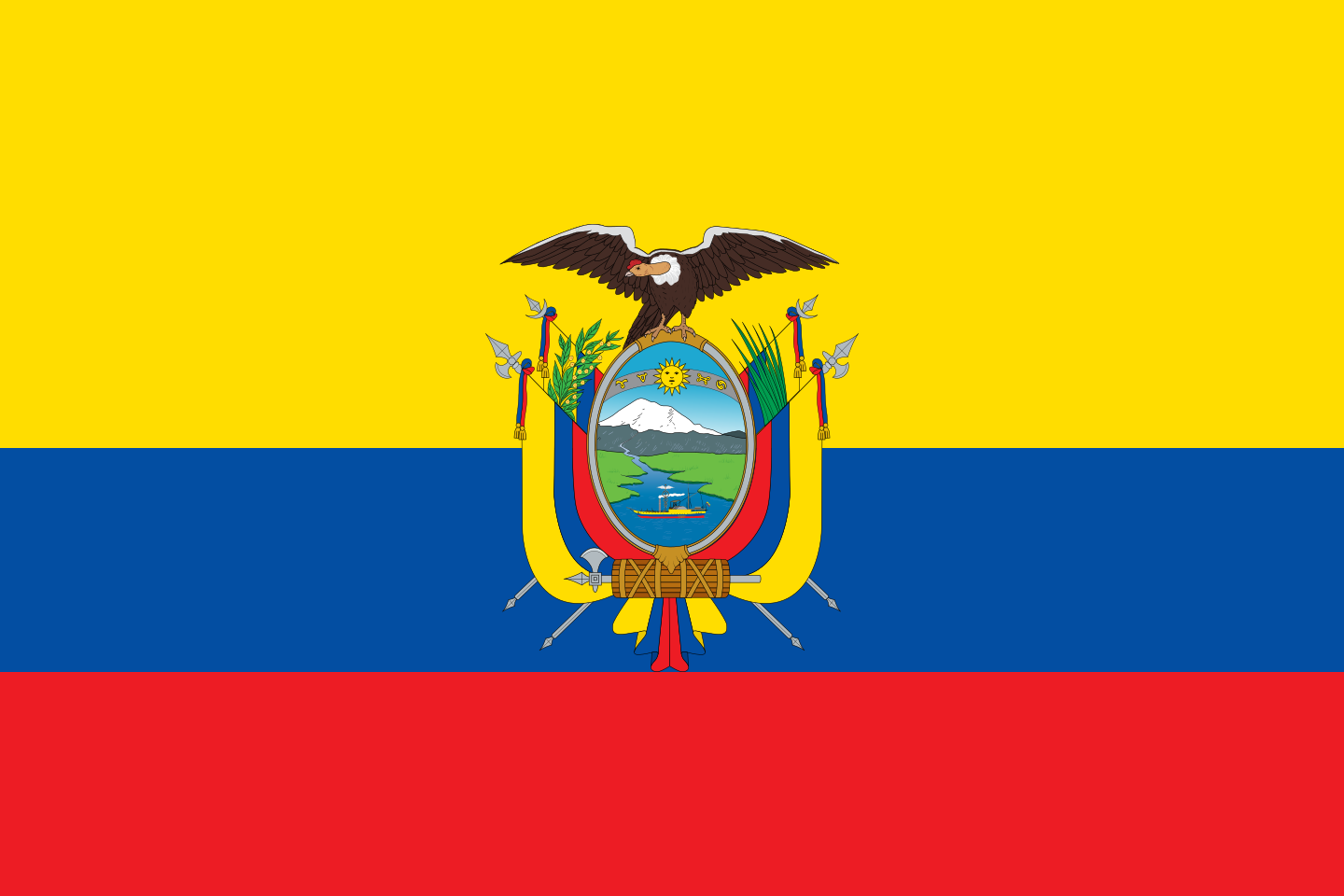
Population: 17,643,054
Total Land Area: 248,360 km2
Population/km2: 71.04
Official Visa Info: Ministerio de Relaciones Exteriores y Movilidad Humana