
Kyrgyzstan
The Kyrgyz Republic is a mountainous country of 6 million people. Tourism is not highly developed, despite spectacular natural beauty, and there is substantial rural poverty. Air and land travel internally and to neighboring countries is limited and can be subject to delays due to infrastructure shortcomings and winter weather. Rural and urban areas are subject to power, natural gas, and water outages. Read the Department of State’s Fact Sheet for information on U.S.-Kyrgyz relations.
Transportation
Driving Hazards: Traffic accidents involving serious injury to drivers, passengers, and pedestrians are common. Drunk driving and hit-and-run accidents are significant problems.
- Many city roads are hazardous due to potholes, uncovered manholes, poor lighting, and pedestrians ignoring oncoming traffic.
- Exercise particular caution and use defensive driving techniques, especially at night and on holidays and to avoid hazardous road conditions.
- Drivers often speed on the newly upgraded roads that connect main cities and towns.
- Many local drivers do not stop at red lights, pass vehicles when it is dangerous or prohibited to do so, drive into oncoming traffic, and do not stop for pedestrians.
- There is no roadside assistance infrastructure.
- Mountain roads in the Kyrgyz Republic are often narrow and treacherous, and may close without notice due to snow, ice, or rockslides. Guardrails and barriers are often missing.
- The road between Almaty, Kazakhstan, and Bishkek, Kyrgyz Republic, is especially unsafe at night or during poor weather. Travel on this route after dark is restricted for U.S. Embassy personnel.
- See our Road Safety page for more information.
Traffic Laws: You must obey all local traffic laws.
- Traffic police have been known to demand payment of arbitrary "fines" for purported infractions. Payment of traffic fines should be made at local banks. Some police vehicles now offer terminals for individuals with bank cards to pay their fines immediately.
- Passengers must wear seat belts and motorcycle riders must wear helmets.
- International driving permits are recognized in the Kyrgyz Republic.
Public Transportation:
- Buses tend to be very crowded and can be unsafe and unreliable.
- Avoid using "private taxis" and unmarked taxis, or entering a cab that already contains passengers.
- Negotiate a fare prior to entering a cab. Cab drivers often try to charge foreigners a higher fare.
- Please refer to our Road Safety page for more information.
Aviation Safety Oversight: As there is no direct commercial air service to the United States by carriers registered in the Kyrgyz Republic, the U.S. Federal Aviation Administration (FAA) has not assessed the government of the Kyrgyz Republic’s Civil Aviation Authority for compliance with International Civil Aviation Organization (ICAO) aviation safety standards. Further information may be found on the FAA’s safety assessment page.
Safety and Security
Ethnic, political, and socio-economic tensions continue to exist in the Kyrgyz Republic, especially in the south. Supporters of terrorist groups and anti-Western, anti-Semitic extremist organizations have expressed anti-U.S. sentiments and may attempt to target U.S. or Western interests in the region, including the Kyrgyz Republic. Kyrgyz police carried out raids against suspected terrorists in central Bishkek in July 2015, leading to the death of several suspects and law enforcement officials and similar incidents can occur at any time.
- U.S. citizens should limit travel to the Batken province (Oblast); travel of U.S. government employees to Batken is highly regulated.
- Land mines in Batken Oblast and near the Kyrgyz-Tajik border continue to be a concern.
- Areas along the Kyrgyz-Uzbek and Kyrgyz-Tajik borders continue to have small, but sometimes violent and deadly, skirmishes between border guards on both sides, and often include civilians.
- Organized crime and narcotics trafficking are widespread in the southern areas of the Kyrgyz Republic.
Protests and demonstrations can break out without advance notice. During times of political unrest, demonstrators often gather in front of the Presidential Administration building (White House), the Parliament, and on Alatoo Square in Bishkek’s city center. Avoid the vicinity of any protests, because even protests that are intended to be peaceful can turn confrontational and possibly escalate into violence.
Crime: The greatest threats to tourists and travelers in Bishkek are traffic accidents and street crime. There have been reports of violent muggings of foreigners in downtown Bishkek at night, as well as in more rural areas outside of Bishkek. Other common crimes include auto theft and pick-pocketing in crowded places such as markets, internet cafes, and on public transportation. U.S. citizens have been robbed by groups of young men who followed them back to their residences from hotels and bars. In addition, U.S. citizens have been victims of rape, assault, and kidnapping in the past.
- Exercise caution in urban areas.
- After dark, you should avoid walking alone or using public transportation.
- Be extremely cautious in or near hotels, bars, parks, and all Do not use unlicensed cabs.
- If you are arriving at Manas International Airport, arrange your transportation from the airport in advance.
Harassment and extortion by people who purport to be Kyrgyz police officers take place occasionally. Reports of these incidents are increasing, especially in the local markets and in areas frequented by Westerners.
- Do not act upon requests by people, whether in civilian dress or in police uniform, if they have no official identification. If provided with identification, take note of the name of the official and the badge number.
- Do not get into cars with anyone you do not know, even if the person claims to be a police officer.
Victims of Crime: If you are the victim of rape or another crime, you should first contact the U.S. Embassy and then local police. The local equivalent to the “911” emergency line in the Kyrgyz Republic is 102 for police, and 103 for emergency ambulance service.
The U.S. Embassy can:
- help you find appropriate medical care
- assist you in reporting a crime to the police, but only local authorities can investigate and prosecute crimes
- contact relatives or friends with your written consent
- explain the local criminal justice process in general terms
- provide a list of local attorneys
- provide information on victim’s compensation programs in the U.S.
- provide an emergency loan
- help you find accommodation and arrange flights home
- replace a stolen or lost passport
More info: See our webpage on help for U.S. victims of crime overseas.
Domestic Violence: U.S. citizen victims of domestic violence may contact the Embassy for assistance.
Scams: See the Department of State and the FBI pages for more information.
For further information:
- Enroll in the Smart Traveler Enrollment Program (STEP) to receive security messages and make it easier to locate you in an emergency.
- Call us in Washington at 1-888-407-4747 toll-free in the United States and Canada or 202-501-4444 from other countries from 8:00 a.m. to 8:00 p.m. Eastern Time, Monday through Friday (except U.S. federal holidays).
- See the State Department's travel website for Worldwide Caution, Travel Warnings, and Travel Alerts.
- Follow us on Twitter and Facebook.
- See our travel checklist for useful travel tips.
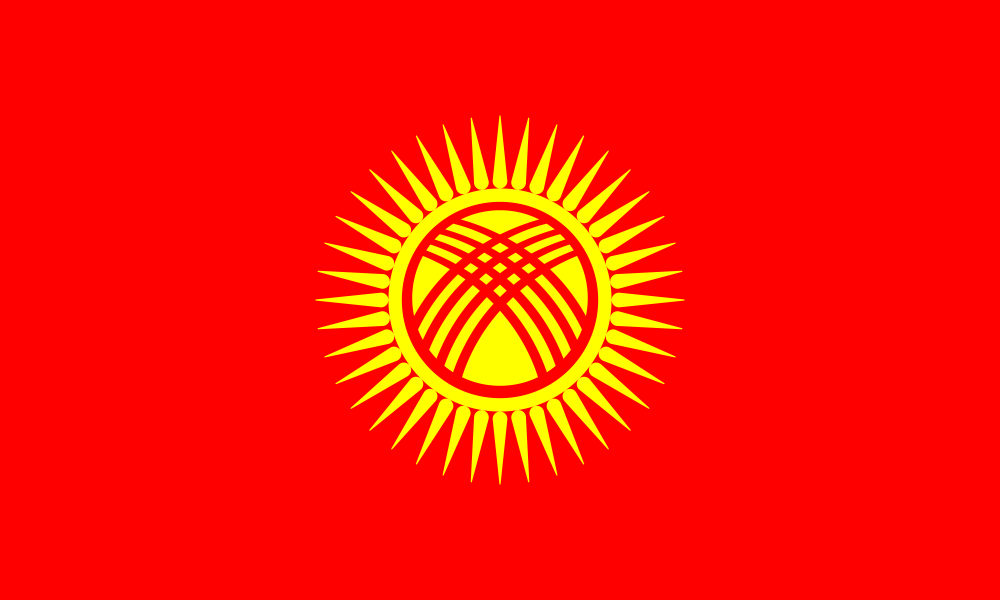
Population: 6,524,195
Total Land Area: 191,800 km2
Population/km2: 34.02
Official Visa Info: Ministry of Foreign Affairs (e-Visa)