
Cyprus
Cyprus is an island nation in the eastern Mediterranean Sea. Since 1974, the Republic of Cyprus has been de facto divided between a government-controlled area, comprising the southern two-thirds of the island, and a northern third administered by Turkish Cypriots. The United States does not recognize the “Turkish Republic of Northern Cyprus,” nor does any country other than Turkey. Facilities for tourism in Cyprus are highly developed. Cyprus joined the European Union in 2004. Read the Department of State’s Fact Sheet on Cyprus for additional information on U.S.-Cyprus relations.
Transportation
TRAFFIC SAFETY AND ROAD CONDITIONS: While in Cyprus, you may encounter road conditions that differ significantly from those in the United States.
Driving conventions and practices in Cyprus differ from those you may be used to in the United States. Speeding, tailgating, overtaking, and the running of caution lights are commonplace, although illegal, and are major causes of accidents. Emergency assistance is available in the Republic of Cyprus by calling 112 or 199. Emergency assistance is available in the area administered by Turkish Cypriots by calling 155.
There are few public buses and no rail lines in Cyprus. Taxis are widely available. Traffic moves on the left side of the road, British style, and modern motorways link the major cities. Secondary roads, especially in mountainous areas, tend to be narrow and winding, and not as well maintained as major highways. Traffic laws, signs, and speed limits are consistent with the standards used throughout Europe. Traffic circles (roundabouts) are often utilized at major intersections.
The use of seat belts (in front seats) and child car seats is required. Motorcyclists are required to wear helmets and the use of cellular phones while driving is prohibited unless used with some form of hands-free kit. Liability insurance is mandatory.
Road safety conditions in the area administered by Turkish Cypriots are similar to conditions in the south, except that the road network is less developed. Insurance purchased in the government-controlled area is not valid in the area administered by Turkish Cypriots, but insurance for that area may be purchased near the U.N. buffer zone checkpoints.
Please refer to our Road Safety page for more information. Also, we suggest that you visit the website of the country’s national tourist office and national authority responsible for road safety.
AVIATION SAFETY OVERSIGHT: As there is no direct commercial air service to the United States by carriers registered in Cyprus, the U.S. Federal Aviation Administration (FAA) has not assessed the Government of Cyprus’s Civil Aviation Authority for compliance with International Civil Aviation Organization (ICAO) aviation safety standards. Further information may be found on the FAA’s safety assessment page.
Safety and Security
Do not, under any circumstances, attempt to enter the U.N. buffer zone at any place other than a designated crossing point. This area is mined and militarized. Never photograph military installations or anything that could be perceived as being of a security interest. Pay particular attention to areas marked with “no photography” signs. Police on both sides of the island strictly enforce these restrictions.
To stay connected:
- Enroll in the Smart Traveler Enrollment Program so we can keep you up to date with important safety and security announcements.
- Follow the Bureau of Consular Affairs on Twitter and Facebook.
- Bookmark the Bureau of Consular Affairs website, which contains the current Travel Warnings and Travel Alerts as well as the Worldwide Caution.
- Follow the U.S. Embassy in Cyprus on Twitter and Facebook and visiting the Embassy’s website.
- In the event of an emergency, contact us at 1-888-407-4747 toll-free within the United States and Canada, or via a regular toll line, 1-202-501-4444, from other countries.
- Take some time before traveling to consider your personal security and checking for useful tips for traveling safely abroad.
CRIME: Although the State Department’s crime rating for Cyprus is medium, visitors to any urban areas should take the precautions they would normally take in any large city. Be alert and always vigilant of your surroundings and of your personal belongings. Criminals often target persons who are distracted, alone in an isolated area, or impaired.
In general Cyprus is a safe place, although crime does occur. Home break-ins resulting in significant losses of cash, jewelry, and other valuable belongings continue to be reported to the police and in the press. Although most home break-ins take place overnight, this type of crime can take place at any time of day or night, including while occupants are present, as perpetrators seek targets of opportunity whenever available. As in any major metropolitan area, all travelers and residents should exercise care by locking all doors and windows to their homes, offices, and cars. Do not leave any valuables unattended or out in public view.
Avoid so-called “night clubs” (topless bars), as they reportedly employ women trafficked to Cyprus for sexual exploitation. These establishments can also present foreign patrons with grossly inflated bar tabs, and customers who refuse to pay may be threatened. Gambling establishments are also best avoided, as some of these locations have been the target of improvised explosive device attacks. Such attacks are believed to be used as a means of intimidation by opposing criminal groups.
VICTIMS OF CRIME: If you or someone you know becomes the victim of a crime abroad, you should contact the local police and the nearest U.S. embassy or consulate. We can:
- Replace a stolen passport;
- Help you find appropriate medical care if you are the victim of violent crimes such as assault or rape;
- Put you in contact with the appropriate police authorities, and if you want us to, contact family members or friends; and
- Help you understand the local criminal justice process and direct you to local attorneys, although it is important to remember that local authorities are responsible for investigating and prosecuting the crime.
The local equivalents to the “911” emergency line in the Republic of Cyprus are 199 and 112. Emergency assistance is available in the area administered by Turkish Cypriots by calling 155.
Please see our information for victims of crime, including possible victim compensation programs in the United States.
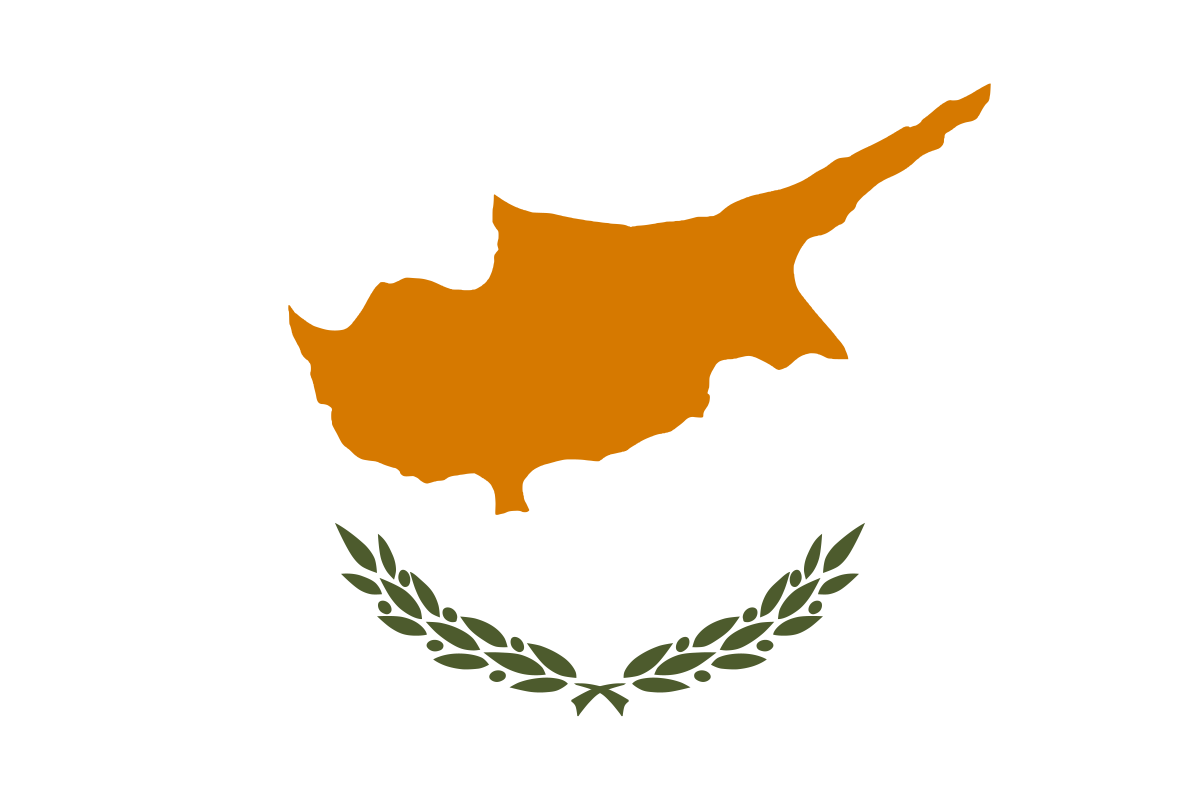
Population: 1,207,359
Total Land Area: 9,240 km2
Population/km2: 130.67
Official Visa Info: Ministry of Foreign Affairs / Civil Registry & Migration Dept