
Belize
Belize is a parliamentary democracy and British Commonwealth country with a developing economy based primarily upon agriculture and tourism. Tourist facilities vary in quality, from a limited number of business-class hotels in Belize City and luxury resorts in the offshore cayes (pronounced: "keys") to a range of luxury resorts, eco-tourism lodges and very basic accommodations in the countryside. Violent crime, especially in areas of Belize City, and most recently in the Teakettle/Camalote/Roaring Creek corridor just outside Belmopan remains a serious concern. Read the Department of State’s Fact Sheet on Belize for additional information on U.S. - Belize relations.
Transportation
TRAFFIC SAFETY AND ROAD CONDITIONS: While in Belize, you may encounter road conditions that differ significantly from those in the United States. When driving in Belize, exercise caution at all times, as poor roads and/or vehicle maintenance cause many fatal accidents.
Driving while intoxicated is punishable by a fine or imprisonment. If a road accident results in a fatality, the driver may face manslaughter charges, regardless of whether alcohol or drugs was involved. U.S. citizens can and have been imprisoned in Belize as a result of road accidents, even where intoxication is not suspected. Public transport consists of buses and private vehicles. Currently, no railways operate in the country.
Drivers operate vehicles on the right side of the road. Road signs are in English with distances indicated in miles. Speed limits are a maximum of 55 miles per hour on highways and 25 miles per hour on most other roads, but they are seldom observed or even posted. Valid U.S. or international driver’s permits are accepted in Belize only for a period of three months after initial entry.
Drivers should watch for speed bumps and rumble strips as they pass through villages on the major highways. These usually denote pedestrian crossings and are not always marked by clear signage or reflective yellow paint.
Roadside assistance can be difficult to summon as there are very few public telephones along the road and emergency telephone numbers do not always function properly. While cell phone service is fairly reliable, reception in remote areas is spotty or non-existent. Driving without insurance in Belize is a very serious offense and is checked at police checkpoints. There are permanent police checkpoints on the major highways throughout Belize, at which all vehicles are obliged to stop.
Road conditions in Belize range from two-lane paved roads to dirt or gravel tracks. Roads often lack shoulders, which can contribute to cars overturning. Roads often lack markings or reflectors; even in urban areas, most streets lack lane markings, contributing to chaotic conditions. Bridges on the major highways are often only a single lane. The Manatee Road (Coastal Road), leading from the Western Highway east of Belmopan to Dangriga, is mostly unpaved, easily flooded after storms and without services. Service stations are available along the major roads although there are some significant gaps in the rural areas.
Inclement weather during Belize’s June to November hurricane season can create hazardous road conditions. Motorists should not attempt to cross any low bridge with water flowing over the surface of the bridge as both the strength and depth of the current may be stronger than is apparent. Certain stretches of the George Price Highway that connects Belize City to Belmopan and continues west to the Guatemalan border have been the site of several fatal accidents.
Many vehicles on the road do not have functioning safety equipment such as turn signals, flashers, or brake lights. Seatbelts for drivers and front-seat passengers are mandatory, but children’s car seats are not required and are not widely available for purchase. Maintaining a safe driving distance to help avoid accidents.
Bicycles are numerous and constitute a regular part of traffic. Cyclists, like drivers, do not always obey basic traffic laws; they commonly fail to obey red lights or stop signs, and often ride against traffic. Although frequently encountered after nightfall, few cyclists have lights or wear reflective clothing. It is not unusual to see cyclists carrying heavy loads or passengers, including small children balanced in their laps or across the handlebars.
During daylight hours, particularly during weekends, highway drivers may encounter groups of cyclists engaged in either training or in organized competitions. These may be accompanied by slow-moving “pace” vehicles such as pickup trucks or motorcycles. View these pace vehicles as the warning they are, and exercise caution when passing groups of cyclists, as their attention may be on each other rather than passing motorists.
The driver of a vehicle that strikes a cyclist or pedestrian is almost always considered to be at fault, regardless of circumstances. U.S. citizens who struck cyclists in Belize have faced significant financial penalties or even prison sentences.
Driving at night is not recommended even in populated areas. Major driving hazards include poor signage and road markings, a tendency by drivers to not dim their lights when approaching other vehicles, drunk driving, and poor or unfamiliar road conditions. Pedestrians and motorcyclists without reflective clothing and cyclists without lights or reflectors also constitute very serious after-dark hazards exacerbated by the lack of street lighting at night. Local wildlife, dogs and livestock in the road are also hazards even outside of rural areas. For safety reasons, travelers should not stop to offer assistance to others whose vehicles appear to have broken down as it may be a robbery scheme.
Please refer to our road safety page for more information. Also, we suggest that you visit the website of Belize’s national tourist office.
SPECIAL CONSIDERATIONS FOR BOATING AND WATER SAFETY:
The Belize Barrier Reef System presents special challenges to boat operators. Nautical charts may not reflect the current location or depth of underwater hazards and individuals who cause damage to the reef can be fined large sums and even imprisoned while awaiting a hearing. If you are involved in an accident involving the barrier reef, you should notify the Belize Port Authority. In addition, you should be aware that the improper removal of a vessel stuck on the reef could cause further damage for which you could be held liable.
We recommend that those considering operating a boat in Belizean waters make certain that they are in compliance with all of Belize’s requirements for boat captains – further information is available from the Belize Port Authority. In addition, we recommend that boat operators obtain insurance to cover possible damage to the barrier reef and that individuals use caution if selecting a yacht charter company. Fishing without a license is illegal, even for non-commerical purposes.
Sea conditions can change rapidly and may be very different from one side of the reef to another. Boat operators should not assume that calm waters inside of the barrier reef will reflect conditions outside. Use good judgment, heed local advice, and pay attention to weather forecasts when boating in Belize.
For scuba divers, there is currently only one hyperbaric chamber in Belize which is located on Ambergris Caye. Medical services requiring a hyperbaric chamber can be very expensive, therefore specialized scuba diving accident insurance is highly recommended. Information about the chamber and dive safety can be obtained on the ambergriscaye.com website and from Divers Alert Network. Divers are encouraged to confirm advertised dive shop certifications via their international websites.
AVIATION SAFETY OVERSIGHT: As there is no direct commercial air service to the United States by carriers registered in Belize, the U.S. Federal Aviation Administration (FAA) has not assessed the Government of Belize’s Civil Aviation Authority for compliance with International Civil Aviation Organization (ICAO) aviation safety standards. Further information may be found on the FAA’s safety assessment page.
Safety and Security
Hundreds of thousands of tourists from all over the world visit Belize safely every year, but Belize is rated high for crime. Domestic gang members and other criminals have used fragmentation grenades and firearms to settle disputes. Neither U.S. citizens nor other foreign nationals are known to have been the victims or targets of terrorist activity in Belize. No areas are closed to travel but visitors should exercise caution, particularly in southern Belize City and remote areas along Belize’s borders.
To stay connected:
- Enroll in the Smart Traveler Enrollment Program for up to date important safety and security announcements.
- Follow the Bureau of Consular Affairs on Twitter and Facebook.
- Bookmark the Bureau of Consular Affairs website, which contains the current Travel Warnings and Travel Alerts as well as the Worldwide Caution.
- Follow the U.S. Embassy in Belize on Twitter, Facebook, and visit the Embassy’s website.
- In the event of an emergency, contact us at 1-888-407-4747 toll-free within the United States and Canada, or via a regular toll line, 1-202-501-4444, from other countries.
- Take some time before traveling to consider your personal security and check for useful tips for traveling safely abroad.
CRIME: Although the majority of reported criminal incidents occur in Belize City, particularly southern Belize City, crime may occur anywhere including tourist destinations such as San Pedro Town (Ambergris Caye), Caye Caulker, San Ignacio, Dangriga, Corozal, and Placencia. Much of the violent crime in Belize occurs on the south side of Belize City, home to several street gangs. Law enforcement and security forces are allowed to conduct warrantless searches of personnel and property in “crime ridden” areas. A lack of capacity, resources,and training impedes the ability of the police to effectively investigate crime and apprehend serious offenders. As a result, the majority of crimes remain unresolved and unprosecuted.
Crime, including violent crimes such as armed robbery, home invasions, shootings, stabbings, murders, and sexual assaults, remains high. Tourists at resorts and on the roads and river ways, and in the Teakettle/Camalote/Roaring Creek corridor just outside of Belmopan, have been targeted. Incidents of crime (such as theft, burglary, home invasion, purse-snatching, and pick-pocketing) increase during the winter holidays and during spring break, but can occur anytime of year. Sexual harassment and/or assault of persons traveling alone or in small groups have been reported. There have been several sexual assaults on U.S. citizens leaving night clubs, and even during daylight hours.
There has been a significant increase in homicides in other areas of Belize, most notably Cayo District and Ambergis Caye, in the past several years. Robberies, home invasions, sexual assaults and daytime assaults are committed across Belize. Victims, including U.S. citizens, have mainly been targets of opportunity. Violent crimes are not common in tourist areas, but U.S. citizens have been assaulted in Caye Caulker and San Pedro, including reports of sexual assault.
We encourage U.S. citizens to exercise caution and good situational awareness in all their travel activities. Visitors should travel in groups and only during daylight hours. Avoid wearing jewelry or carrying valuable or expensive items. Visitors to tourist attractions should travel in groups and remain at the main plazas at Maya ruins and the central areas. Although there are armed guards stationed at many of the archeological sites, armed criminals have been known to prey on persons walking alone or in small groups from one site to another. While many victims of theft are unharmed and only robbed of personal belongings and cash, victims who resist have suffered injury. U.S. citizens who become victims of a robbery should report it immediately to the nearest police station as well as notifying the Embassy.
Do not leave valuables unattended in vehicles, hotel rooms, or on the beach. Consider leaving high value items, such as cameras and other electronics, at home. Women’s handbags should be zipped and held close to the body. Men should carry wallets in their front pants pocket. Cash transactions should always be handled discreetly; avoid openly displaying money in public.
Theft of credit card information or funds committed against patrons of tourist destinations happens frequently in some areas of Belize. Belize is not “PCI Compliant” (PCI – Payment Card Industry) with the Point of Sale credit card swipe machines used at hotels. This means that when a receipt is printed out from a credit card machine, it does not delete the first 12 numbers of the credit card number, instead printing the numbers, making it easy for someone such as a server at a restaurant, a cashier at a store, or a front desk clerk at a hotel to record the numbers for making unauthorized charges against the card. It is believed that several credit card fraud rings are currently active in Belize, particularly in San Pedro.
“Confidence scams” also occur in Belize, especially in resort areas. While there is no indication U.S. citizens are specifically singled out because of their nationality, tourists in general are particularly vulnerable to these crimes, resulting in visitors being pick-pocketed or robbed. More serious crimes have included armed robbery, physical assault, and being swindled out of large sums of money from fraudulent real estate and land sales or other business deals.
There have been reports of fraud committed against expatriates who have attempted to purchase land in Belize. Many expats have reported being the victim of scams in which land is purchased that either did not exist or was legally owned by other parties. It has been reported that Belizean authorities have not been proactive in investigating these crimes and enacting measures to ensure that they do not occur in the future.
Drug use is common in some tourist areas, but you should not buy, sell, hold, or take illegal drugs under any circumstances. Tourists arrested with illegal drugs may be detained until trial, and if convicted, face lengthy prison sentences in Belize. Belize classifies marijuana as an illegal drug for which a conviction of possession of even small amounts could result in heavy fines or imprisonment. Belize does not recognize the medical use of marijuana as permitted in some U.S. states, and U.S. citizens can be charged, fined or serve time in jail for possession of an illegal substance.
Do not buy counterfeit and pirated goods, even if they are widely available. Not only are these items illegal in the United States, if you purchase them you may also be breaking local laws.
Possession of a firearm or ammunition requires a license from the Government of Belize. An individual charged merely with possession of an unlicensed firearm, or unlicensed ammunition, is subject to imprisonment without bail and charges in the Belizean Supreme Court. Several U.S. citizens have received stiff prison sentences for possessing small quantities of ammunition.
VICTIMS OF CRIME: If you or someone you know becomes the victim of a crime abroad, you should contact the local police and the nearest U.S. embassy or consulate. The Consular section can:
- Replace a stolen passport.
- Help you find appropriate medical care if you are the victim of violent crimes such as assault or rape.
- Put you in contact with the appropriate police authorities, and if you want us to, contact family members or friends.
- Help you understand the local criminal justice process and direct you to local attorneys, although it is important to remember that local authorities are responsible for investigating and prosecuting the crime.
The local equivalent to the “911” emergency line in Belize is 911.
Please see information for victims of crime, including possible victim compensation programs in the United States.
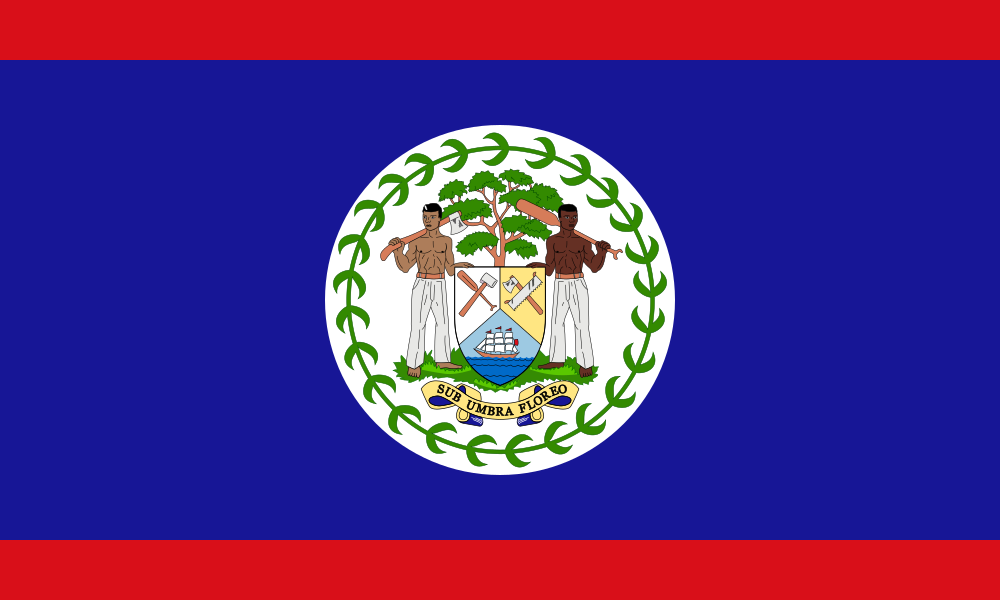
Population: 397,628
Total Land Area: 22,810 km2
Population/km2: 17.43
Official Visa Info: Immigration & Nationality Department